-
Day 3
How often do I stare at an empty computer screen, utterly devoid of ideas for what to write about, wondering When will I ever feel inspired again? When will the urge to say something about my life or the world return? Despite all my experience to the contrary, it always feels like such a permanent condition when it comes over me, so irremediable and hopeless….and then, suddenly, Donald Trump decides to start a war with Iran in order to distract from his involvement in a global trafficking network, and I find myself with something to say.
In other words, trust in the universe. It will always provide.
My daughter, as you may know, is living in Jordan at the moment. If you’re like most Americans and couldn’t find Jordan on a map, I can tell you it shares borders with Israel, Palestine, Saudi Arabia, Iraq, and Syria (which maybe does not help you at all), but more importantly, it lies directly beneath the flight path of the missiles currently being lobbed and skeet-shooted back and forth between Israel and Iran. She is near enough to Israel that she can hear their air raid sirens, and yesterday she heard the blasts that killed 9 people in Beit Shemesh. She sent me some videos of missiles being intercepted that she took from the roof of her building, and you can see why Trump’s so jealous of Israel’s Iron Dome. It’s weirdly mesmerizing to watch the way they shoot bombs out of the air before they hit their intended targets, and the footage from Israel is particularly dramatic: you can really imagine this invisible forcefield as one bomb after another disintegrates overhead. Rarely acknowledged amid the awe, of course, is the unfortunate fact that the fragments of those intercepted missiles still have to come down somewhere, and several of them have already landed in and around Amman. The victims killed by this falling, flaming wreckage are no less dead for having been unintended.
My approach to coping with bombs falling around my daughter is to coach her in the same preparedness strategies I practice on a daily basis: does she have a go-bag with a supply of water and food? A power bank for her phone? Cash on hand? No, no, and no. For all the ways we are alike, we have very different anxiety-management styles. She has a LifeStraw water bottle (that I gave her), and that’s going to have to be good enough–though she did go to the store for more water. The Jordanians are unbothered by all this; they’re used to being caught in the middle of these dramas, which I at least find reassuring. Her classes have been canceled, but most schools and the gym are still open, and where coffee shops are closed, it’s because of Ramadan, not the bombing. War or no war, you’ve still gotta fast.
One way my daughter and I are alike, though, is in our monitoring of who’s paying attention to our personal dramas. I don’t know if any of you do this, but when I’m experiencing a crisis, I take note of who checks in. It’s ironic, really, because I have several close friends who routinely ask me how I’m doing, and I find this question almost personally offensive–Do I not seem ok? Why are you asking?!–but when I have, for example, a child living in the middle of a war zone, you better believe I’m making a list of all the people who don’t ask me how we’re doing. Also unappreciated: comments along the lines of “Maybe she should get out of there!” My God, what an incisive analysis! Perhaps you can use your tremendous intellectual powers to get the airspace over her region opened up, and the airlines operating again, and then clear a path through the missiles and fighter jets so she can leave safely.
Forgive me. I’m a little on edge.
She and her dad have big plans for this week: they’re supposed to meet in Vienna, spend a weekend in Austria, then return together to Amman. It’s unclear whether this can still happen; there’s only one airline operating out of Jordan, and the airspace is currently closed to them at night–a detail I find mildly amusing. The missiles are much easier to see at night, which seems like it would make them easier to avoid! I’d really rather they let the planes fly at night because it’s Ramadan and everyone is tired and cranky during the day. This morning, my daughter texted me that a fighter jet swooped so loud and low over her building that everyone around her scattered. If she’d reached up, she said, she could have touched it.
I told her that if she can get out, she should go straight to Vienna and stay there–though she also has a standing invitation from her boyfriend’s family in Tunisia, which we’ve established lies just outside the maximum reach of Iran’s longest-range missiles. We each speculated about how long this would go on, how infuriating it would be if she had to miss out on her Austrian adventure with her dad, how deadly boring it will be to have to hang out in her apartment alone for days on end if school continues to be canceled because of the war. She doesn’t want to come back to the US for any significant stretch of time, but with each passing day I feel more strongly she needs to get the fuck out of Jordan. Today she got alerts, first warning her to stay away from the US Embassy (it’s 4 kilometers from her apartment), then warning her “you know what, don’t panic but just stay inside, and if you happen to be in a car, calmly leave it where it is and find some stairs to crouch under.” So the sense of urgency is growing.
All of this has, obviously, gotten me thinking about the millions of people around the world who currently love someone in a war zone. This is a novelty for us–it’s the first week, and our current administration is capricious enough and distractible enough that it’s easy to assume this war could be a blip on the collective radar, and then on to other nightmares. But today I am thinking about Ukrainians living outside Ukraine. I’m thinking about Palestinians, the millions more of them exiled than still living in their besieged homeland, and about the displaced Sudanese and all the other mothers and fathers, children and friends of people who are trapped behind enemy lines, whose well-being and lives are in constant, and much more urgent, danger. I’m thinking about the toll it takes on them, the energy required to keep putting one foot in front of the other while the person you love is in harm’s way, for years. A few nights ago, I sat together with friends talking about the Ramadan fast, about how it’s not distinct from your daily routine; you do it while still living your normal life, and it must be hard to continue to meet all the regular responsibilities of every day without any food or water. It’s Ramadan now. I’m thinking of what it feels like to hit refresh on your news apps again and again; to keep checking your texts; to keep checking in, when there is nothing you can really do except sit, and wait, and hunger. For food, for news, for safety.
Most of all, I’m thinking about the Iranians, who have endured this regime for 37 years, but in particular these last two months, during which they have risked everything to rise up, and been crushed with a brutality that defies comprehension. I suppose it’s possible the killing of Khameini could bring them a step closer to liberation, though of course, nothing in the history of US interventions abroad suggests this will be the case. Whatever is going to happen will take time, and likely far more suffering, to parse out, and this is another thing I’ve been thinking a lot about these last few days: the ways in which war disrupts people’s plans, throws their lives into uncertainty. Last Saturday morning as the bombs started to fall, the people of Iran had concert tickets and doctor’s appointments, vacations and birthday parties planned. They were starting new jobs or looking forward to retirement, taking final exams and pregnancy tests, but now the bottom has dropped out of their lives. Meanwhile, the plans of three despicable old men grind on. The Ayatollah lived to a great old age oppressing and brutalizing his people so he could be the god of his own private universe, and the line of succession is well established to carry on that vision. Netanyahu has tortured and genocided an entire population in an effort to keep himself in power and avoid prosecution for his own crimes. And Donald Trump is engaged in a quest to dismantle and degrade the most powerful nation on earth, simply to enrich himself and his family, and fill the gaping emptiness at his center. All three of these men, blessed with long lives and wealth, the trappings of power, children to succeed them. Each a self-styled representative of their particular Abrahamic religion, but versions twisted and poisoned beyond recognition. For all that American bigots love to stereotype Islam as a religion of terrorism, Christianity in the US has been warped into a cruel parody of itself that delights in the suffering of the vulnerable. These days we hear “Christian” influencers and pastors warning of something they call “toxic empathy,” a concept manufactured to justify supporting a leader congenitally devoid of empathy, whose actions would enrage their savior far beyond his outburst in the temple.
Obviously, there are no guarantees of safety anywhere–certainly not in the United States–but I’ll feel better when my baby’s not under the path of those missiles. I recognize how fortunate I am that my daughter has the freedom, the support, and the resources to get out of harm’s way at the first opportunity…but I’ll breathe easier when she’s actually done it.
-
On Mirror Neurons and Manifestation
In the couple of years following my ex’s departure, I became kind of preoccupied by neurology: specifically, by the phenomenon of phantom pain, and mirror neurons, and the mirror therapy often used to treat amputees who continue to experience intense, chronic pain in a body part they no longer have. The parallels are obvious, but the neurology is fascinating even separate from the backdrop of calamitous loss: these tiny cells in our brains, the mirror neurons, represent a kind of physiological rebuke to the idea of an individual self, or the notion that any of us could ever be truly alone. Your mirror neurons respond to everything you see as though it is happening to you. When I see someone laugh, or cry, or panic, or die, some part of me experiences it as though I am laughing, crying, panicking…dying. The only way my brain knows that something is happening to another person, rather than to me, is by checking my body for confirmation. This is where the mirror therapy that’s used to treat phantom pain comes in, because phantom pain happens when the brain keeps sending signals to a body part that no longer responds, so one way to treat it is to find a different way of reassuring the brain that the limb is ok. This is done by placing a mirror so that it reflects the intact limb, to give the brain an image of a whole body. Show the mirror neurons that the body is well, and they will stop insisting it is not.
I was so in love with this idea that I wrote a story about a physical therapist who works with wounded vets while also recovering from her own emotionally disfiguring breakup. At one point, the veteran in the story is describing the experience in which he lost his leg, but also saw several of his friends die. Writing that scene, it came to me suddenly, one of the roots of PTSD: that when we see someone die, a part of us responds as though we have, ourselves, died. And so some of us go on to need a kind of therapy that convinces our psyches—or our souls—that we are, in fact, still alive. That it is permissible to continue living.
I’m thinking about this today because (cue the vibe shift) I was just listening to the weekly Chani reading and something she said reminded of the mirror neurons. There’s BIG stuff happening this week in the skies, and whether you “believe” in astrology or not (it would take me a whole post just to clarify how I would answer that question and none of us need to go there right now), you can hardly deny that there is BIG stuff happening in the world all the goddamn time, to the point that we would all probably agree we are way overdue for a decade or so in which not a goddamn thing transpires. But the main thing that’s happening this week—or rather, culminating this week, since it involves two very slow-moving planets and has therefore been unfolding for some time and will continue to do so—has to do with the conjunction of Saturn and Neptune, and what each of these planets represents. Saturn is, of course (if you know your mythology) the figure of time, authority, structure, and institutions; it is tradition, it is the established order of rules, law, and patriarchy (in a birthchart, Saturn is often used to represent one’s father or the role of men in one’s life). Neptune is in many ways the opposite of Saturn: it represents illusion and dissolution, deception, imagination, boundlessness and self-undoing, as well as a kind of cosmic love and impersonal, universal compassion that is generally understood to be feminine. But if I had to pick one word out of all those descriptors to summarize the two energies that are coming together this week, they would be “dissolving” and “structures.” Which I think seems indisputably to be a phenomenon playing out all over the world. Every time I turn on the radio, it seems like somebody is talking about the end of the old world order. Personally, I feel that Saturn clearly has rulership over the billionaire class (entrenched wealth and power being very much part of its domain) and hope that Neptune’s influence, perhaps in the form of their deluded self-undoing via their network of trafficking and corruption, is coming to demolish them once and for all.
The point that Chani was making, though, was about the opportunity this moment presents to imagine new ways of structuring our world. She made an offhand comment about how we are always seeing death and disaster in our newsfeeds and our media consumption, which got me thinking about the mirror neurons, because it works that way, too: if we are constantly watching video of death and destruction, chaos and confusion, then we are naturally going to feel as though we are in the midst of those experiences ourselves even if they are not happening directly to us, and we are probably going to promote and prolong those energies in our own small ways. But conversely, if we are imagining a different future, and projecting it out into the world, then other people are going to take that in as well, and they are going to feel the experience, and spread it through their own networks. This goes back to the idea that artists are crucial to the creation of a new order, because we need people to imagine a different kind of world, and show us what that might look like, in order for people to start actually building it. In the novel I’m working on right now, there is a character who gets kicked out of high school because of a story she writes in which Donald Trump dies while Truthing on the toilet (his final post is Zelensky uses Just For Men on his beard, aging badly, SAD!) and a woman-led revolution known as the Vagina Uprising results in an assortment of bad actors (Elon Musk, JD Vance, Kristi Noem and so on) being loaded onto a Mars-bound rocket that accidentally explodes over the Gulf of Mexico. RFK is sent to a live in a lighthouse off the coast of Maine, with only the seabirds for company. Men are banished from government for ten years.
Is that the future we’re headed for? Well, certainly not if we don’t at least try to imagine it. Trump and his billionaire friends and authoritarian besties are imagining all the time, and none of what they’re working toward is going to end well for the rest of us. The least we can do is dream up some alternatives and feed those into the universal programming.
This week, as some of the year’s most consequential astrology plays out, my invitation to you is simple: imagine the change you want to see in the world, and manifest it any way you can. Write a story or a poem, and share it with the world (or just your corner of it). Make a post on social media. Go volunteer somewhere, join an organization, attend a School Board or City Council meeting. Everybody has a role, and revolutions are built from small gestures by many people. This is the week to figure out your part and start doing it, because when other people see your strength, your courage, your activism, your creativity, they will connect with theirs, as well. As the talmud reminds us all, you are not obligated to complete the work, but neither are you free to abandon it.
-
Awaiting Instructions, Excerpt 1: Saoirse
Saoirse Malloy is a good kid.
At 17 years old, she has a GPA of 4.25, thanks to all those AP classes. She volunteers 10 hours a week at Lakewood Hospital on the Children’s Neuro Unit, and she’s active in three different clubs at her high school. She doesn’t smoke, vape, drink, or use drugs, and has never had a serious boyfriend. She has babysat for practically every family in her neighborhood and all of her friends’ parents; she is universally adored. Her siblings annoy her, but she tolerates them with generous equanimity, and she gets along with her mom, her dad, and her dad’s girlfriend, even now, even after everything. So far, she’s been accepted at two of her five reach schools, with offers of substantial financial assistance. Saoirse Malloy will be able to write her own ticket. She could be a doctor, a lawyer, a teacher, a scientist; she could be all of the above.
She is not going to be any of those things.
Saoirse Malloy is not going to college; chances are, she won’t graduate high school. As it stands, the best-case scenario probably involves attending community college from prison…but there are worse options on the table.
At the beginning of 10th grade, Saoirse had become active in an after-school club called EarthWatch as part of her long-range college planning. She knew that extracurriculars were crucial to getting into a good school, so she’d spent her freshman year club-hopping, checking out the various organizations to see which ones appealed to her, and which would look best on a college application. She ended up committing to three different groups whose schedules and purviews worked well together; the combined portfolio of environmental activism, racial justice, and anti-gun advocacy appealed to Saoirse, who—at that time—imagined herself pursuing a career in politics, law, or possibly the nonprofit sector. She would train the totality of her ferocious adolescent idealism and moral clarity—resources she imagined she would always possess in practically endless abundance—on the most intractable problems of humankind, and one by one, she would solve them.
It wasn’t one thing, precisely, that derailed these ambitions, though they weren’t helped much by the EarthWatch meetings, which, most days, consisted of 40 minutes spent googling environment memes to post on social media, or brainstorming alliterative challenges such as Skip The Straw, Pass On Plastic, and Love The Lake, which were intended to motivate their classmates to Do Their Parts (Doing One’s Part being a key component in all of the activist groups Saoirse joined). No, it was a lot of things in combination, over time: a protracted accrual of information that built into understanding, like the bits of dirt and dung that termites gathered and spit together into looming, indestructible towers. There was the relentless drone of climate-disaster news, swelling louder by the day as her freshman and sophomore years ticked past—news made viscerally worse by the brief would-be reprieve of Joe Biden’s presidency, followed by Kamala’s demolishing defeat and Trump’s zealous resumption of punitive, petroleum-fueled power. There was the stunning condescension and indifference of certain state lawmakers she and her club-mates visited to petition (read: beg) for changes to gun laws or policing policies. And most of all, there was her own growing awareness of the world around her, and the imminence with which it was predicted to change, worsen, or disappear.
This awareness happened slowly and all of a sudden. It was there in the way she started to think differently about certain things, like the nature shows her family loved to watch together: Animal Kingdom and Planet Earth and Our One World. Where once she’d shared in her mom’s and Michael’s delight as the shows spun them through the world’s most exotic and awe-inspiring ecosystems, Saoirse began to notice how watching them plunged her into dread and despair. No episode was complete without a disclaimer of some sort, a warning in terms sometimes subtle, sometimes scary, about the peril this particular animal or habitat faced, the urgency with which help was needed. But help from whom? What was Saoirse supposed to do, or her brother, or her mom? The older the program, the deeper the dismay as she wondered—privately, not wanting to ruin anyone else’s mood—how much of what they were looking at even existed anymore.
Then came the 2024 election, when, in the least surprising turn of events in human history, the United States reelected a former president who was not only a deranged and semi-demented rapist, but had actually tried to overthrow the government (add that to the list of things he thankfully couldn’t get right). Those weeks after the election had been some of the worst Saoirse could remember living through—worse than when her parents told them they were getting divorced, but similar in the way the two of them had slogged through the three weeks of living separately under the same roof until her dad had found a place of his own, conspicuously avoiding one another, not meeting each other’s eyes, failing to achieve the benign indifference to which they were clearly aspiring. The way Saoirse’s friends and Democrat family members and progressive online personalities performed their exhaustion and dismay; the way they sleepwalked through the interval between election and inauguration, like the final days of empire, like they had nothing left to give and now would have to take to their collective beds…it infuriated her. What were these people going to do about things? What would be their response to the outrage of a second Donald Trump presidency? Were they just going to spend the next four years hate-posting on social media while he destroyed the world?
And then he commenced doing exactly that. Straight out of the gate: the Project 2025 agenda in full force, across every sphere of government. Dismantling everything from scientific research to academic freedom to environmental policy to foreign aid. Disappearing people! Bringing back coal! What was anyone doing about any of it? Making cute signs and standing on street corners. Posting snarky memes. Crying over brunch. Standing around with their phones in hand while masked, unidentified stormtroopers threw zip-tied landscapers and delivery men into windowless vans. Fucking useless—that’s what the American people were. Generations of exceptionalism had rendered them incapable of seeing that the same thing that had happened to nations all around the world was finally happening to them, and all they knew to do about it was whine and wait for a future election that, at this rate, was never going to happen.
Then it was January, 2026, and suddenly it seemed like Minneapolis was ready to start the revolution, but with what? Whistles and phones? They were going up against ICE agents in Kevlar and gas masks, carrying the same guns we’d sent with our troops to Iraq and Afghanistan. They weren’t even real cops or soldiers, most of them, just unemployable losers ready to vent whatever rage they’d been nursing in their parents’ basements on moms in puffy coats and kids in bunny hats and whatever Black or brown person had the misfortune to cross their paths. Suddenly even her stupid uncle Mike wasn’t quite sure what to say about Trump’s America; he had a closet full of guns and had voted for the orange bastard three times, but the idea that someone should be shot down in the street because of the legal firearm they were lawfully carrying didn’t sit well with him. Not that you could get him to admit that with more than one liberal family member in the room.
But even with the frisson of revolution in the air, Saoirse could hardly come up with a reason to hope. What was her future going to look like? Her siblings’ futures? What kind of world awaited her generation, and those who would follow? And for how much longer would the generations follow? Because even now, Saoirse cannot imagine what sane human being would ever choose to have children. Why would I bring a baby into this world? had been an elitist trope for decades, the sort of thing jaded first-world intellectuals asked in earnest outrage at parties. For Saoirse—for her whole generation—it was a wholly legitimate question, with a baldly self-evident answer: I wouldn’t. Any prospective offspring of hers would inherit a world so red in tooth and claw, the few species capable of adapting to the apocalypse battling each other for survival, that there would no longer be any safe places. You might find a home far from hurricanes and wildfires, only to drown in your own living room when a springtime’s worth of rain fell in a single afternoon. You might live at the top of the hill, but still die from the heatwave that followed while everyone’s power was still out. Or starve when the crops failed. Or you could hang on through all of it, and live among a community of traumatized survivors just waiting for the next disaster.
This was all bad enough; this information was plenty to keep her up at night and kill her appetite. But worse was the knowledge that the people who still had power to do anything about the state of the world—who could still head off the worst of the calamity, if they wanted to—clearly could not be convinced to do so. The world was run by men (and a few women) far beyond fears like hers: their love of money, their grip on power, and their proximity to death (she assumed) rendered them impervious to arguments for change. Donald Trump would be long dead by the time Mar A Lago sank beneath the waves, and his billions (if they existed) would protect his vile offspring from the trials that lay ahead. Mitch McConnell wouldn’t struggle to survive a famine, and Lindsey Graham had no family whose bleak futures might move him to action. For fuck’s sake, the whole world had spent years watching the Palestinian people murdered, starved, relentlessly traumatized, and the US was still sending Israel weapons! And nobody was paying attention to Sudan. The people with power wanted to stay in power. None of them were interested in breaking the system. And none of them were going to live long enough (or be poor enough) to suffer the repercussions of their inaction.
Her peers agreed, and many of them acknowledged that they were actually terrified, on a daily basis, about what the world was going to look like by the time they were adults. But did any of them know what to do about it? Did any of them have a plan of action, to get to the people with real power, to show them what needed to be done right now, today?Of course not. Instead, they retreated to the climateless limbo of TikTok and Instagram the moment their fears bubbled to the surface. They knew the world was burning up, but what were they supposed to do about it? They stopped using straws, and they organized recycling drives, and every so often they rallied their classmates to boycott a company or a brand whose climate policies were unsustainable. A dedicated few went to Columbus, or even Washington, to talk to their elected representatives about the changes that needed to be made. They would be shown around the capitol buildings, provided with fifteen or twenty minutes to sit down with an aide and enumerate their concerns. Maybe the official in question would pose for a photo with them. No one deluded themselves into believing that any of this was going to make a difference. So Saoirse had decided on a different approach.
She has an awareness—keener than most—of her assets. She is articulate and personable; reasonably extroverted; emotionally intelligent. She might not have quite a Greta Thunberg-caliber intellect, but she’s smart enough and she works hard, and she has a certain charisma. In fact, she is self-aware enough to call it what it is: not just personal magnetism, but privilege. Whiteness. She is a pretty, green-eyed blonde with straight teeth and a cute little figure, from an upper-middle-class family. Not the sort of girl anyone is going to suspect of criminality. And not the sort of girl anyone wants to see die. This is a substantial well of resources from which to draw.
But her most valuable asset is no asset at all: Saoirse Malloy has nothing to lose.
Still several months from legal adulthood, Saoirse has already given up on the idea of a future. Summer nights with her family, sometimes she’d sit on the back porch while her siblings toasted marshmallows over the charcoal grill and wonder how many more nights like this there’d be: fed and comfortable, in a peaceful city, with AC, a nominally-functioning government, and a refrigerator full of food. To be able to sit in front of a television at the end of the day, with no more pressing worry than tomorrow’s test or the number of likes on her latest post, and then sleep in a bed secure in the knowledge that everyone in her family would survive the night: this was a life of luxury billions of people around the world would never know. She couldn’t explain how she had won the lottery of existence by being born into these riches, but she knew it couldn’t last. Too many systems were collapsing simultaneously. By the time she was her parents’ age, this world would be gone. People like her mom and dad would see it end. People like her and her brother and sister would pioneer the new one, remembering all that was lost.
She’d started small, compiling a list of the worst lawmakers in her city and state—people who’d voted to loosen gun laws, repeal regulations, block access to abortion or voting or healthcare. She began with subtle acts of sabotage: simple hacks to crash their websites, embarrassing deepfakes she made with Sora. The acts themselves weren’t the point; she made TikToks documenting her mischief, and posted them from a VPN with AI-voiced commentary describing what she was doing, and why, encouraging them to follow suit. She tagged influencers across the social media spectrum and got them to promote her videos, and before she knew it, she had a following of her own: hundreds, and then thousands, in countries all over the globe, and a few of them were doing what she asked. Some had begun posting their own videos in reply, documenting their own acts of resistance against the rich and powerful in their own communities who were working to keep the world on its current course. She had created a network—decentralized, nebulous, largely anonymous, and growing—united around her message that the adults of the world had thrown up their hands, and the only hope now lay with the youth. No one is coming to save us was the tagline she used to end every video, and it had become the rallying cry of her little movement. The next step in her plan was to escalate the attacks: destabilizing acts of destruction and violence in unexpected places that would not only reach a wider audience, but would further unify her supporters. Once they reach a critical mass, she will reveal herself and initiate Phase Three, a whole new kind of collective action; guerrilla resistance, taken to its furthest extreme. She will lead her followers in the delivery of an ultimatum to the world’s adults: a global hunger strike that won’t end until either the planet is saved, or the future is lost—which is the inevitable outcome of the course they’re on, anyway. It will be a battle of the suicide pacts: one faction leading the whole world to doom via willful disregard of multiple escalating catastrophes, the other ending it all preemptively, by sacrificing themselves.
Within the four walls of her childhood bedroom in a comfortable neighborhood on the West Side of Cleveland, Saoirse has everything she needs to change the world: her phone, a little gas money, and her imagination. The powers that be could finally pull their heads out of their asses (or their piles of money) and do something to fix the mess they were in, or they could face consequences they had failed to foresee. To Saoirse Malloy, it is a perfect plan that cannot possibly fail. Maybe they’ll all die in the apocalypse, as expected. Maybe they’ll die by their own hands, and be spared the agony of having to see it all through to the end. Or maybe, by some miraculous alchemy of fatalism and teenage bravado and irrational American optimism…maybe they will actually save the world.
-
Name It Love
All week, I have struggled to formulate a post. I’ve covered a lot of topics, and written a lot of words, but nothing came together in a way that felt shareable. I wrote a little about protests, and a little more about Catholicism, and I put together 1200 words on the subject of how deeply angry I am at the loved ones in my life who voted for this nightmare we’re living in (or refused to vote against it), only to realize that a) that’s what everyone else I know is already writing about and b) I was barely scratching the surface and would likely need several thousand more words to get anywhere near the heart of it. Also, those of you who know me have heard it all before. Not to say that it wasn’t worth the effort; in the course of the writing I happened upon a beautiful scene from the life of spoken-word poet Andrea Gibson, whose work I (like a lot of people) discovered last summer, after their untimely death from cancer. In the documentary about Gibson, an ex-girlfriend of theirs recalls sharing all the complicated, painful emotions that were coming up for her around her father’s imminent death, and how they made it difficult for her to be with him. Everything that you’re feeling right now, Andrea told her, name it love.
I’ve thought a lot about those words over the last few days: that’s what all of it is, after all. My anger at my family members is love—for this country, as it’s being destroyed; for the parents who are being snatched away from their children; for the children being sent to prison camps; for the people who want to be left to make decisions about their own bodies and futures in peace; for the sick and the suffering who could be helped by science and medicine that won’t be funded now. And it’s the failure of love, too: the abiding sadness that is the natural result of seeing people you love choose a two-thousand-year-old book of mythology over the flesh-and-blood human beings in front of them for as long as you can remember. That any of them could actually say to me—have said—that they don’t understand letting politics come between people who love each other, when they have themselves been putting religion between us since I was a seven-year-old child; have put religion between themselves and their own children…that is the sadness, and the outrage, of love denied. All over the country, what manifests as anger and alienation is, at its essence, love that has been thwarted, or disappointed, or stirred to outrage. It’s helpful, I suppose, to remember that. I believe in periodic reminders of what unites us—even those of us who seem most distantly polarized, to use the favored buzzword of our time—and I’m reassured to think that, somewhere deep inside, even the people who would happily see me slumped over my steering wheel for being snarky to a cosplay cop are motivated by their own kind of love. It’s a twisted, miseducated version of love, but it’s born of the longings we all share. We all want to be safe. We want our children to have a chance at their dreams. We want to be free to make the choices we believe will bring us happiness.
We also want other people to stop telling us what the fuck we ought to want and that we’re going to hell if we don’t do what they say.
And maybe we want those people to try taking their own advice and start listening to their own holy man, who, in fairness, actually had a lot of good ideas.
Anyway, in the end I decided I was overthinking things, as is my wont, and ought to just break the logjam of frustration by posting something even if it didn’t feel particularly revelatory. I’ve worked on other things as well this week: revisions of the poem I shared recently—I may show them to you, I can’t decide whether I’ve improved it or made it worse—as well as the novel I periodically remember I’m supposed to be writing. And I’ve been reading; one month into 2026 I’ve got three books under my belt and a fourth nearly finished; the weather has helped me in that regard. One of the books I just finished is called The Light Eaters, and it’s about the question of plant intelligence. I’ll admit it has not exactly gripped me, but I’ve learned a few things, and in the final chapter, the author caught my attention by questioning the idea of “invasive species.” Many of you who know me know my hatred of these varieties, which, if you are even a little bit literate in the world of botany, you quickly realize are absolutely everywhere. But this author notes that any plant, no matter its species, is simply doing what all living things do—trying to survive, trying to make a better future for its offspring, and trying to adjust to whatever difficult circumstances (such as being transplanted against its will far from the home that produced it) are thrust upon it. Given the choice, plants, like people, would probably prefer not to be forced into unfamiliar environments not suited to their needs. The only reason we have invasive species at all is…us. It’s people who move them from one continent to another, plant them in their yards because they’re pretty or bear them unwittingly on the soles of their shoes, and then wage war on them for growing where they don’t belong. But like us, they do their best to figure out what the new situation requires, and adapt to it. Life, I thought as I listened to this book, is hard for everyone. Maybe we all just try to help one another do the best they can, wherever they are.
-
A Different Kind of Disaster
Ok, so the last post was all about things that helped get me plugged into the creative zone. You know what does not help me plug into the creative zone? Disaster preparedness. I’m a bit of a prepper, so when I hear—as we have been hearing, relentlessly, all week—that there is a “potentially catastrophic” winter storm on the way, my nesting gene kicks in. All creative energy is diverted to imagining and anticipating everything I could possibly need in order to survive as comfortably as possible. I’ve been shopping, fortifying, charging, and clearing out for days now and I think I have probably done all I can—Christ knows, I have enough food. Prepping is my coping strategy when anxiety kicks in: anyone who’s traveled with me knows this. Also anyone who’s looked in my pantry. Or my hall closet. It’s not just that I worry I won’t have something I need for an emergency: it’s also that there is a highly specific strain of joy that I experience when something happens and I have the exact right item to meet that moment. Whether it’s a week’s worth of electrolyte solution, a dose of Plan B, or this funny little combination multi-screwdriver-allen-wrench thingy, being able to rummage through my suitcase/closet/purse and pull out whatever will solve the problem at hand is deeeeeeeply my thing. Hermione Granger’s beaded bag is my actual heart’s desire.
So I’m ready, if also somewhat disappointed. I had fun plans this weekend with an assortment of friends, and almost all of it has been scrapped as a result of the incoming snowpocalypse. But this morning, I was helpfully reminded that there are worse things than having to give up your group sauna, or a snowy night bundled up under blankets with somebody you like to snuggle. Because there is a whole cohort of people out there right now for whom this storm might mean not just a few days’ worth of inconvenience, but an actual radical alteration in the course of their lives.
Specifically, I’m talking about people who are going to miss their abortion appointments.
About a year ago (note the timing), I joined the board of a local abortion fund; if you don’t know what that is, it’s a nonprofit that raises money to help people pay for abortion care. I love everything about this development in my life: the people I work with, the work we’re doing, the new experiences and opportunities it’s bringing me. A few months ago, I decided to also become an intake volunteer, which is one of the people who responds to calls to our warmline from people who need help paying for their abortions. After the first training, I explained to my daughter that pretty much the whole job is calling people to tell them you’ve got them covered, and then sending money to clinics.
“So you’re basically like an abortion Santa Claus?” she replied.
“Abortion Oprah,” I retorted. “YOU get an abortion! YOU get an abortion! YOU get an abortion!”
But the reality is, we are much more like your abortion concierge.
Now that Virginia is the last remaining southern state with abortion access up to 27 weeks, the logistical arrangements required to access care are ridiculously (and intentionally) complex. About a third of our callers are now traveling hundreds, even thousands of miles just to access a procedure that takes less time to perform than it may have taken them to get pregnant in the first place. (Seriously: a first-trimester surgical abortion takes about 5 minutes.) Add to that the fact that, if a person is calling an abortion fund for help to pay for their abortion (typically between $600-$1000), there is a very good chance that they don’t have the sort of job they can easily take time off from to spend on multiday travel for medical care. They might not even have a car. Even if they do, the cost of gas for two thousand miles roundtrip is steep. They might also need someone to go with them, because you can’t drive yourself home after an abortion if you had sedation—so that’s a second person who needs to be able to make this journey, or else lodging for the night and Ubers back and forth to the clinic. And if the caller already has children at home—as the large majority of abortion-seekers do—then arrangements need to be made for them as well.
As a result, the logistical planning required to get a person in, say, southwest Florida the abortion they need will only just begin with making a pledge of funding to the clinic where they’ve scheduled their appointment. That part—paying for the abortion—is the easiest part of the process, and if that’s all they need, the whole interaction might take ten minutes, tops. But what good is that money if the caller can’t actually get to the clinic for the procedure? Our intake coordinator recently had a caller for whom she had to book flights from Alabama to Florida to Virginia; she arranged lodging in Virginia and transportation from the hotel to the clinic, and then, of course, the caller’s travel home. We’ve paid three-figure Uber fares to get people from rural Maryland up to Baltimore for abortions. We CashApp money for childcare. We’ve worked with nonprofits that provide free air travel for people who need reproductive or gender-affirming care that’s illegal in their home state. Sometimes you make all these arrangements to get a person from one state to another for their abortion, and when they arrive at the clinic, they learn that they have a medical complication, or the gestational age is wrong, and that clinic can’t perform the procedure. Now we have to figure out how to get that patient to the right clinic for what they need—and take care of them while they’re there. And remember, all of these arrangements are time-sensitive. We don’t just offer financial support for getting there or getting the abortion; we help people pay for food while they’re on the road, for heating pads and ibuprofen, for the second dose of misoprostol and the maxi pads they’ll need for after. And on a weekend like the one we’re headed for, when we have callers who are unhoused and in need of care, we will pay for them to stay warm and safe in hotels until the storm has passed. We are absolutely, as my father always loved to say, doing the Lord’s work—and he would have said it about this, I’m certain, because even though he was an evangelical Christian who personally opposed abortion, he was also an old-school Republican who told me many times that abortion was between a woman and her doctor, and none of the government’s business.
Would that such Republicans still existed.
Clinics will keep their doors open for as long as they can, but there are a lot of people with appointments in the next few days who aren’t going to be able to get there—and when accessing abortion requires this level of planning and coordination, you can’t always make all those details line up twice in a row. Chances are, there will be people for whom having to stay home means having to stay pregnant. And that is a heartbreaking reality in a country that loves to tout its family values, but it is also entirely on purpose. The politicians and activists who oppose reproductive rights want everything about seeking an abortion to be as difficult and degrading as possible in the hope that they can shame some segment of people out of their procedures. They do this while proclaiming their protectiveness and respect for women, but pregnancy and childbirth raise a person’s risk for a whole host of life-altering complications, including death by domestic violence and an assortment of medical conditions. No one who doesn’t want to take on that risk should ever be forced to, just as nobody who doesn’t believe in abortion rights should ever be forced to have one.
So this weekend, if you are cozied up in a warm place with people you like (or happily alone) and power for your wi-fi, ask yourself whether it matters to you that every American has autonomy over their own body and freedom to choose their own life. If the answer is yes, and you (somehow) have a few extra bucks, consider donating them to an abortion fund where you live, or the one I work for, or to the National Network of Abortion Funds; support your local Planned Parenthood or some other clinic; or go to Plan C and order abortion medication to have on hand in case you or someone you care about needs it. And I will take a minute to be grateful I’m not traveling two thousand miles this weekend with the storm of the century on my heels.
-
Manic Episode
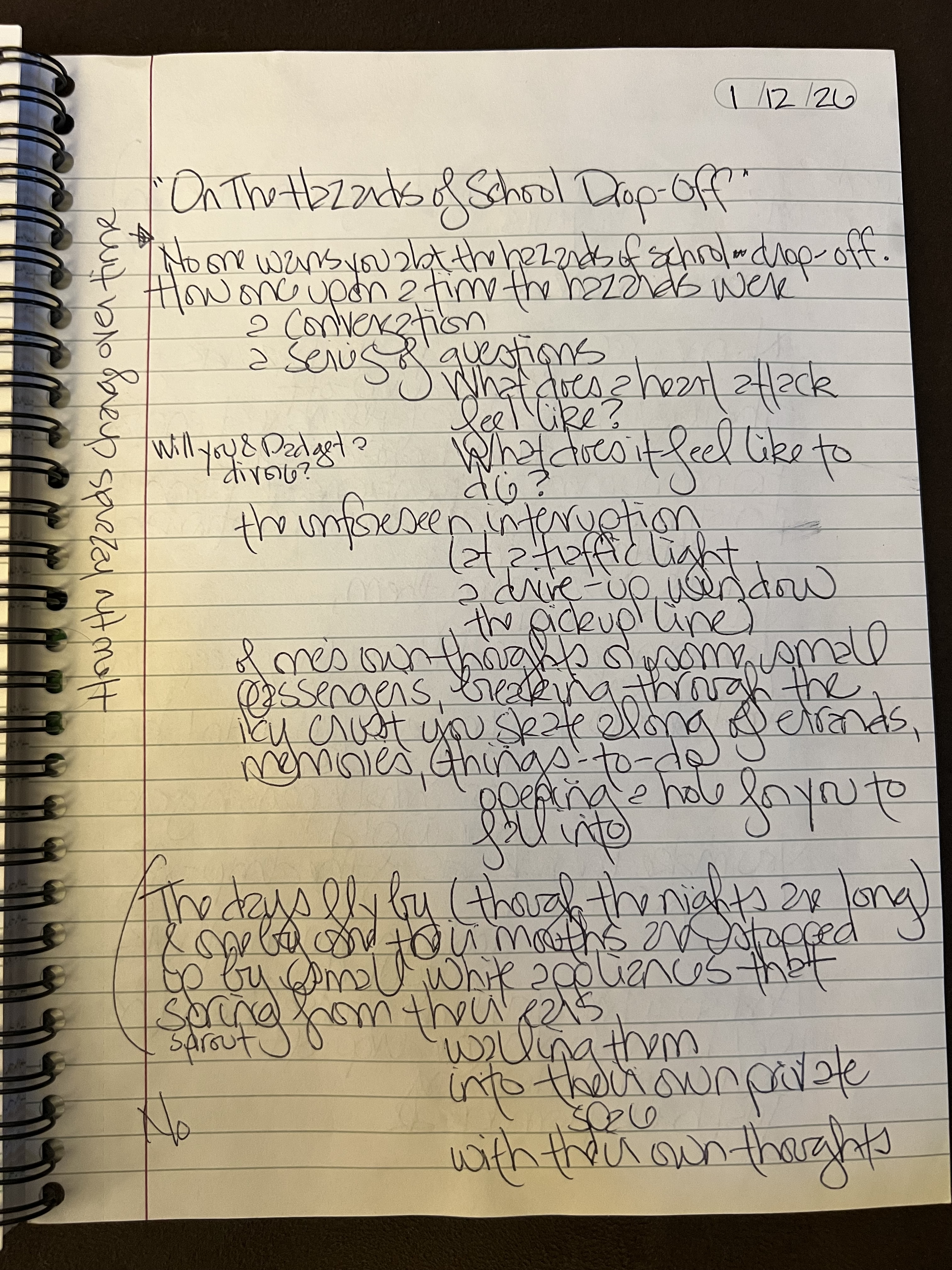
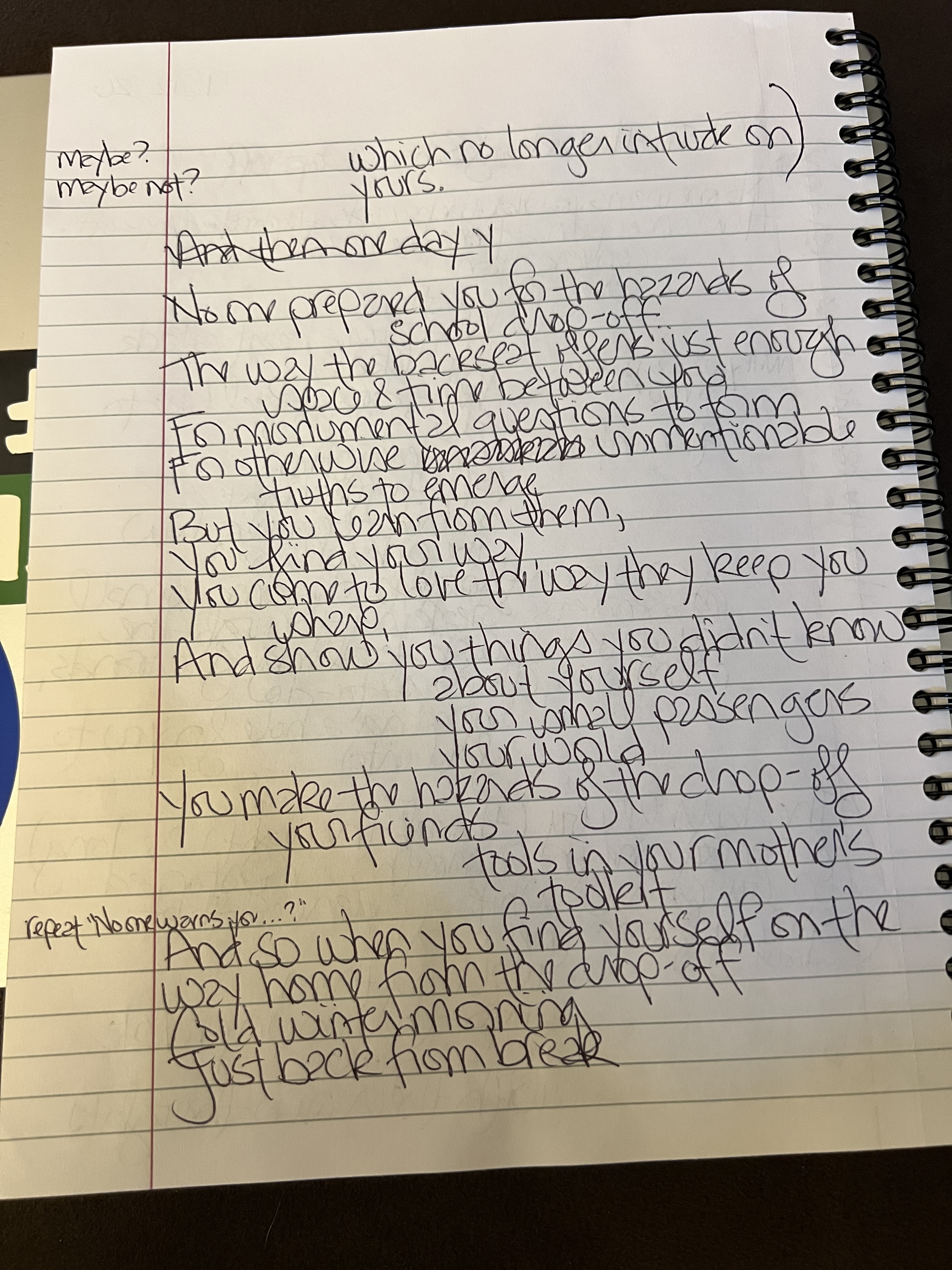
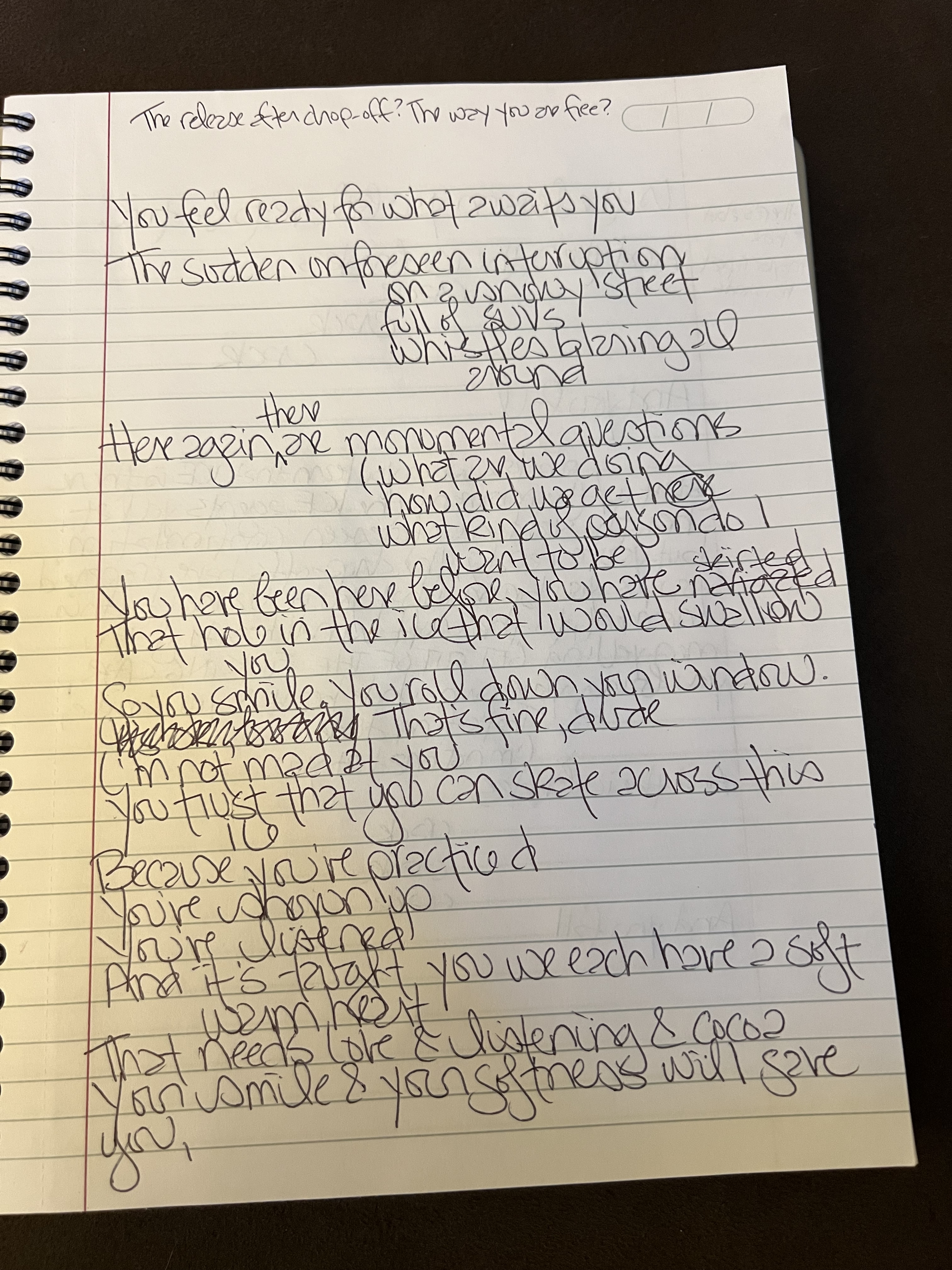
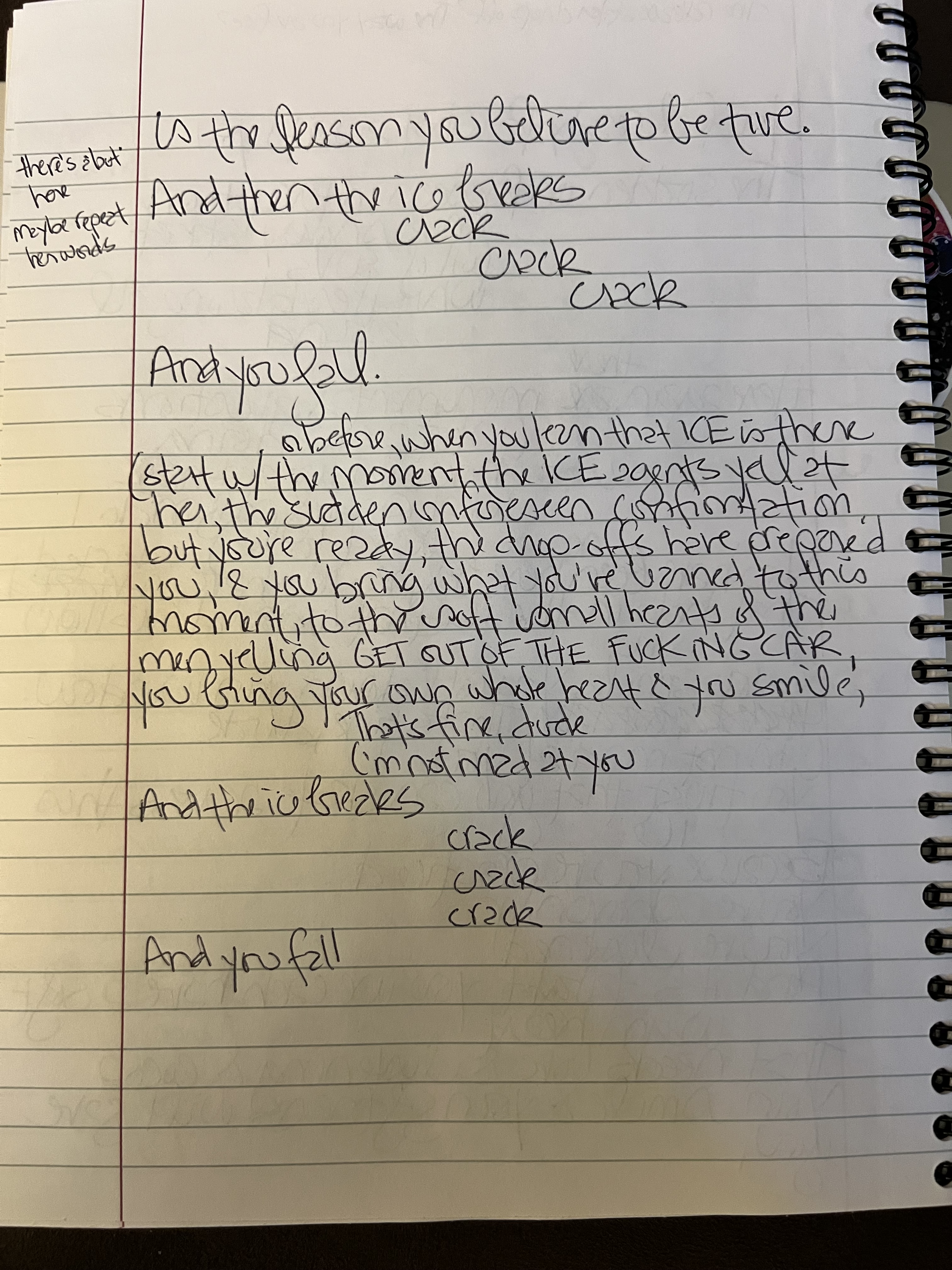
I want to say something—mainly for my own benefit—about what happened to me last week, because it’s the sort of thing I forget about soon after and then convince myself will never happen again, so maybe it will be helpful to put it here, where I can remind myself periodically. I told you I’ve been making some changes in the hope of reviving my cognitive faculties and getting more motivated to write; those things—not checking my phone a billion times a day, working first thing in the morning, reading more—have helped, for sure. Starting this blog has helped enormously. I forget, when I’m not blogging, how much having an audience, with its notions of external pressure, and a place to put things I’ve written where they might actually be seen gets me going. It’s tremendous, really: suddenly, I want to write about everything. But there’ve been other things, too—I’ve been reading a LOT, I’ve been listening to more audiobooks and less news, and I’ve been showing up to the page, as they say: sitting down to write, even just a little, every single day, so that when the idea comes, I will be ready. And I went to a vigil a couple of weeks ago for Renee Good, and all the other people who’ve been murdered, disappeared, assaulted, and detained by ICE.
I like protests; I went to my first around age 12 (we’ll talk a lot more about that in future posts) and have since been to more than I can count. We’ve got quite a history with protesting here in my adopted hometown, and in these times it feels good to do something. It’s encouraging to see other people—hundreds of them—who refuse to accept that this is really the path America is choosing. One of the speakers at the vigil was a minister from a church some of my friends go to. She talked about the idea that Renee Good’s queerness should not go unmentioned because in the context of Jesus’ ministry, it’s important. Again and again in the gospels, you see Jesus aligning himself with the outcasts, the marginalized, those the religious establishment condemns as sinners. He heals them, he hangs out with them; even on the cross, he turns to the repentant criminal being crucified beside him to say, This day, you shall be with me in paradise. (Fun Catholic fact: the Good Thief’s name was Dismas, and he was my first choice of patron saint when it came time for confirmation, but all my friends were going with stupid popular choices like Theresa and Bernadette, and they talked me out of Dismas. So I chose Stephen, the first martyr, instead. I should’ve stuck to my guns.) That this queer woman, a mother and relative newcomer to her community, was willing to show up for the people ICE sought to terrorize is entirely consistent with Jesus’ vibe. As is the fact that she ended up with two bullets in the chest.
So all of that was swirling around my consciousness at the beginning of the week. I’d been kind of stuck for days working on that post about my childhood fantasy of martyrdom; I couldn’t figure out how to end it, or what the actual point of it was.* But I worked on it Monday morning, then headed off for a walk. Listening to a book about plant intelligence, not really thinking about much of anything. Except maybe one thing, which was a post from my original blog that’s been on my mind recently; it was about trying to run an errand with my kids in the car, and the insanely gut-wrenching conversation about my mother-in-law’s death that my then-6-year-old daughter initiated, which then led my son to weigh in with his own emotional crisis. It was the sort of thing that used to happen to me all the time and I wanted to revisit it but hadn’t yet. I was about to head out to do the grocery shopping when something happened.
Suddenly I had a thought, about the fact that Renee Good died on her way home from dropping her son off at school. I knew that her son was six, and that his father had died, and so I could imagine she’d probably had a lot of the same kinds of conversations in her car that I had had with my kids. And just like that, I had to sit down with my notebook. I don’t know if you’ve listened to the Telepathy Tapes podcast (if you haven’t, you should), but there’s a great episode about creativity in which she examines the question of whether ideas are alive and seek us out; it’s an experience I’ve had before, and I was absolutely having it here. I’ve never thought of ideas as alive, but I do believe that they are out there in some form, maybe looking for a way to become real, and if you can make yourself receptive, they will come to you. And sometimes, they will come exactly as it happened to me that day: fully formed, just waiting to be written down.
I sat down to write the idea that was in my head, the first few lines that had come to me, and the next thing I knew, I had four pages. I wrote them by hand, which I think is really important—typing slows me down, I’m not that fast at it (although my fingers are flying as I recount this lol), but also, typing engages different parts of the brain and I believe it’s not as conducive to connecting with inspiration when it needs to come out. I wrote everything that seemed to be in my head, and then I got up to go do the shopping, but as I was doing putting my shoes on, more thoughts came, so I sat back down and wrote the rest of it. On my way to the store, I didn’t turn on the radio; I wanted to stay in the zone in case anything else came to me. Which of course it did, in the same space it always does: the checkout line. What physics exists in the checkout line that somehow your brain plugs itself into the collective universal consciousness and channels all the ideas? I don’t know, but it fucking does. I made more notes in the line while I waited to be rung up, and I dictated some more in the parking lot on the way to my car. When I got home, I went straight back to my office and started typing—this time, I wrote on my laptop and rearranged, regrouped, revised what I had put down an hour before. And just like that, I had a poem.
A poem, and an absolutely insane emotional high that lasted the rest of the day. Honestly, I think of these experiences as being like little manic episodes, because the rush that accompanies them is for real. I was bouncing off the walls all afternoon, so stoked with joy and excitement because every time this happens to me, it feels like a fucking miracle. It is possibly the greatest feeling in the world. The doubts and the second guessing may come later—yes, it’s imperfect, nothing comes into existence perfect—but that’s fine, it doesn’t matter. As my Muralist friend taught me years ago (and maybe I’ll reshare that post here sometime, it was one of my most popular posts ever on the last blog), the goal is finished, not perfect. So I still shared it, I’m still thrilled about it, and I’m still so grateful to know this kind of thing can still happen in my life. The other night I went to a dinner party, and someone asked me to read the poem aloud, which I’ve obviously never done before. It was a weird and wild experience, and while it did not exactly elevate the “party” vibe, it was still pretty great.
So I’m putting all this here for myself, and maybe also for you, to come back to, as a reminder that the magic does happen when you put yourself in a position to receive it, even when you’ve spent months berating yourself that it hasn’t happened in way too long. Do the things that get your creative energy flowing—maybe even make a list, so you can check periodically to make sure you’re keep at it. Show up to your practice. Pay attention to the world around you. Be ready when the universe responds.
*As for that roadblock, it vanished of its own accord during a phone conversation with a friend, and ended up part of my post about where we are in this country, One Year In, which revolved around the activist training I went to last weekend. Very often, I’ve found, when I’m stuck trying to figure out where a piece is going or how it ends, I just have to wait, and keep living my life, until the thing that completes it happens to me.
-
One Year In
When I was a little girl, I dreamed of being a martyr.
Like, literally, I dreamed of dying for the One True Church. From the day I joined it as an incoming third-grader at St. Rose of Lima parish, Catholicism took over as a core aspect of my identity. And I know how it sounds: pathetic, a little bizarre, possibly indicative of some mental health issues, but if you know anything about Catholic doctrine and/or the psychology of nine-year-old girls with divorced parents and prominent Leo placements, it actually makes quite a lot of sense. Martyrdom is the highest achievement to which an ordinary Catholic can aspire. Martyrs are heroes: their stories are told and retold down the ages, they get feast days and prayer cards and dominion over aspects of life that correspond to their agonies. Martyrdom gets you attention! Respect! Admiration! Martyrs are ballsy and courageous, whereas regular saints are mostly pious and annoying. It’s also a vastly more attainable status than regular sainthood, which requires a lifetime of poverty and service and probably also misery. To be a martyr, all you have to do is die.
The problem, obviously, was that when I was growing up in 1980s Cleveland, Ohio, there were precious few things for which a little Catholic girl might hope to be martyred. Nobody was persecuting Catholics that I knew of—in fact, it seemed to me in those days that everyone in the world was Catholic (except for my dad and his family, who adhered to some weird alternate version of Catholicism called “Protestant” that sounded the same to me but in certain critical, though incomprehensible, ways…was not). After extensive research and investigation, I was forced to conclude there were only two ways I was likely to qualify. One was to follow in the tradition of virgin martyrs like 11-year-old Maria Goretti, who was canonized after fighting off a rapist whom she then, with her final breaths, forgave for stabbing her fourteen times (preserving one’s hymen: consistently among the most reliable paths to sainthood). The other option was to carry a life-threatening pregnancy to term, and die refusing an abortion. For obvious reasons (no rape; no stabbing; actual sex; the prospect of months being fussed over before death), this option seemed preferable.
Obviously, neither of those outcomes materialized. But fast forward a couple of decades: I read a book called In the Spirit of Crazy Horse by Peter Matthiessen. It’s the story of Leonard Peltier and the American Indian Movement, and a series of terrible events on the Pine Ridge Reservation in South Dakota, and I couldn’t put it down; my mother-in-law made fun of me for bringing it on our family beach vacation, because it was not light reading. Up until I read that book, I had never been able to imagine valuing anything in the world more than my own life. The drive to martyrdom had been about attention, recognition—it was about wanting to be one of those beautiful, serene girls on the holy cards and the stained glass windows—but it was also about belonging: to something bigger than yourself, which is what Matthiessen’s incredible book spoke to in me. As I burned through his chronicle of life on the reservation, and the history that led up to it, the struggle to survive a genocide and the drive to maintain an identity and a culture that generations of white men had worked to erase, I got it. I understood that there were things more important than individual lives, and understanding that made me yearn for it, in a way. We are all of us, inevitably, doomed to die. If it has to happen anyway, wouldn’t it be preferable to die in the service of something vast and irreplaceable, for the betterment of the people I left behind? Wouldn’t I much rather die resisting tyranny than by, I don’t know, choking on a blueberry, or falling down the stairs?
My friends, I’m thinking it might be time for all of us to start to asking ourselves what we would be willing to die for.
This weekend I went to a training organized by a couple of local activist groups. I’ve been to quite a few since they started offering them last summer, and when they started back in May, the sessions were held in a church basement; there’d be a potluck first, followed by the training, and there were probably 30-50 people any given week. Saturday was my first time back since August; they’re meeting in a new location, a big church downtown that also houses a homeless shelter, and when I got to the church, there was a line out the door. The sanctuary, by the time we got started, was full. I’d guess there were a couple hundred people packed into the pews, eager to learn about what they should do if they came upon ICE harassing their neighbors.
It was incredibly encouraging to see so many people there, less than two weeks after Renee Good’s murder. The group leader asked people to call out the emotions they experienced when they learned about the shooting, and the immediate responses were fear and outrage. Everyone in that room, I suspect, was scared. Is scared. Nobody wants to end up slumped over their steering wheel, or bleeding in the street. But they were also furious, and horrified, and determined not to let this really be the path we choose.
The next hour or so was spent on the actual training, which focused on how to monitor police interactions with the community. There were four rules we’re asked to follow, and the first rule is, Don’t look away. When you see the cops roll up on someone and start asking them questions, pay attention. Take a moment to observe: is everyone ok? What’s happening here? Is this situation about to escalate? Rule #2 is, Don’t make it worse. We talked about how not to trigger cops, when and how to film them, how to support the person being targeted, and what to do afterward—for the target, or with the video. We were encouraged not to scream at or verbally assault federal agents, but also to “respect diversity of tactics,” which I felt was an elegant way of acknowledging that sometimes screaming at them is really all you can do.
Near the end of the session, our leader returned to a point that I know she makes often at these trainings: that none of what we’re talking about is theoretical. Here in Charlottesville, we know this. We’d been living with the realities of 45’s America for months before Unite the Right descended on our little town, and we know that those same Proud Boys and neo-Nazis who terrorized us with torches in 2017 are now employed as masked federal agents breaking down doors in Minneapolis; throwing teargas canisters under family minivans; smashing people’s car windows and dragging them out, unconscious, in cuffs. We have seen what counter-protesting can cost a community, and we know that when push came to shove, the police did not protect us. They put on their riot gear and formed corridors with their bodies to keep the Klan safe from us, and they stood by doing nothing a month later when the “alt-right” returned for a long-planned weekend of brutal violence, and murder. As we approached the end of the meeting, our leader reminded us that standing up for your neighbors against ICE can get you hurt. It can get you killed. Each of us needs to consider what level of risk we are willing to assume.
I think about it all the time. The other day my daughter was telling me about a video she’d seen where a family in Minneapolis had a Door-Dasher beg to be let into the house because ICE was after her. They did let her in, but eventually the threats and intimidation from ICE wore the homeowner down, and she sent the woman outside, both of them sobbing, distraught. I immediately proclaimed this homeowner a terrible person, handing a woman who’d looked to her for help over to federal agents. I was horrified, judgmental. But later on it occurred to me: what if that woman’s kids were in the house? What if ICE was threatening them? What would I do in that position, if ICE was threatening to arrest or assault my children, or my dog? ICE agents have shot people’s pets, even when they were safely restrained. Would I send someone out to be arrested if I thought that cops were going to kill Roxy?
I suspect none of us knows what we’d do in a crisis until it arrives, but here’s what I know right now: I don’t want to die. Like, at all; I have an amazing life full of people, places, and things I love, and I hope to continue enjoying it for many years to come. But also? I have an amazing life. Full of people, places, and things I love. Already, at this point, I have experienced more joy, more privilege, than a lot of people get in a whole lifetime. I could go on and on explicating my precise feelings on this subject, but the nutshell is: it’s enough. I’m not finished, I still want more, but honestly, I can’t ask for more. I don’t want to get hurt, or maimed, or emotionally disabled by a traumatic assault, but I also don’t want those fears to be what drives me. Those fears are what Stephen Miller is counting on. Those fears are all he’s got. I want to think bigger than fear: about who I want to be in this moment, what I value, and what matters more than my comfort, or even my life.
Maybe this is what Catholicism and Leonard Peltier were preparing me for.
We Americans are part of something vast and irreplaceable. For all our country’s flaws and shortcomings, all the many ways that we’ve failed to live up to our ideals, those ideals are precious, and worth preserving. Traveling has given me a perspective on this country that I didn’t have before—our friendliness, our absurdity, our unrelenting optimism; we’re like children in the household of the world, adorable and entertaining, but frequently destructive and generally oblivious to anyone else’s point of view. However ironically we stumbled into it, however poorly we’ve manifested it, this nation was founded on something beautiful that the world needs: a presumption of equality. A belief in the inalienable rights of every individual. The idea of pursuing happiness. And more recently, the creation of a government that exists to serve its people; to provide them with the basic necessities of life so that they can be free to pursue whatever happiness means to them. All of this is still possible. But it’s slipping away from us, and wresting it back won’t be easy. One year in, on this Martin Luther King Day, I think we have reached the point in the story where everyone who cares about this country and its future has to wrestle with the question of what they’re willing to do to save it.
Last night, my friend was telling me about that morning’s sermon at her church service. She said the minister encouraged people to formulate a saying—like a mantra—that they can come back to whenever their resolve wavers, or they feel afraid. Something that will remind them, not of their personal worries, but of the larger project we’re each a part of (whether we like it or not). Something, I assumed, that you can say to yourself when ICE comes tumbling out of an SUV. My first idea was (as usual), Well, we’re all gonna die anyway! Then I thought of the prayer of St. Francis, always one of my favorites: Make me an instrument of thy peace, that where there is hatred, I may bring love. When I was a child, the nuns at St. Rose’s encouraged us to repeat to ourselves, The Lord provides for His children. As a child with a greater-than-average inclination to worry, that one worked for me for years. The options are infinite, we can all find something to encourage us, remind us what’s important. This morning I thought, maybe I’ll try something smaller, more specific. Maybe this weekend gave me a mantra without me noticing.
Don’t look away.
-
Fucking Bitch
I’m thinking that “fucking bitch” needs to become the “nasty woman” of the second Drumpf administration. Let’s put it on t-shirts and coffee mugs and get it tattooed on our forearms. Let’s just decide that Fucking Bitch is the status to which we now aspire, and the energy we bring to our collective efforts.
I’ve watched a lot of the videos from Renee Good’s murder, and I struggled, with each new clip, to understand what happened to make that man—fully armed, swaddled in Kevlar and camo, anonymized by his mask and glasses—feel so threatened that he had to fire three bullets at close range into a fucking car. Because let’s face it—and I mean no disrespect when I say this—Renee looked kind of absurd in that moment. She had the look of a mom who was still in her PJs, still with bedhead and morning eyes, who put on boots and a coat to drop her kid off with the accompanying childlike trust that she would not have to see anyone or interact with the public in that state. Like we all have, some uncountable number of times ourselves. She looked like a woman who left the house fully expecting that twenty minutes later she would be back in her kitchen with a second cup of coffee.
Let’s just pause there for a second.
Fuck.
So why? What got Jonathan Ross so incensed that he put that bullet in her? I watched all these videos and I couldn’t really make sense of it: yes there was a lot of noise (noise would definitely make me shoot someone), there were cars and it was kind of chaotic, but seriously? That’s why he had to kill someone’s mom? Has this guy had no training for the job he currently holds?
And then I saw the video of her wife.
I watched Becca Good walk around the car with her phone, mocking all the ICE agents. Cracking jokes about switching license plates, asking Ross if he wants to go toe to toe, telling him to go get some lunch. Calling him Big Boy. I watched it and I felt my body tense, my heartrate rise, because now I knew what was going to happen—not from watching the other videos, but from half a century living life as a woman. I knew, without having to see him, what effect her mockery was having on him. That might have been the moment, honestly. When she talked to him like he was a child who needed a sandwich and a nap, I honestly think that was the moment he locked in. She condescended to him. She made him feel small. All the weapons and Kevlar in the universe can’t compensate for the feeling of smallness, not when it’s coming from a woman, not when it’s coming from some fucking bitch. I don’t even think Renee is who he was talking about when he said that; I think he was talking about Becca. I think that bullet was meant for Becca.
Was it Margaret Atwood who said it best? Men fear that women will laugh at them. Women fear that men will kill them. Because they do. Over and over and over again, they fucking do.
For making a small man acknowledge his smallness, Becca Good ended up pacing the sidewalk with her wife’s blood all over her, trying to make sense of what just happened. But we have all been fucking bitches at some point in our lives, probably for making other small men acknowledge their smallness, and now we are a nation ruled by small men whose smallness is rolling over the landscape to crush us all. Maybe it’s because I’ve reached the stage of life where women are assumed to have run out of fucks to give and begin embracing their witchiness (though witchiness has always been a component of my vibe), but from this point forward I think I want fucking bitch to be the energy I bring to every gathering, and to the world at large. At this point, fucking bitches are probably who we need the most.
-
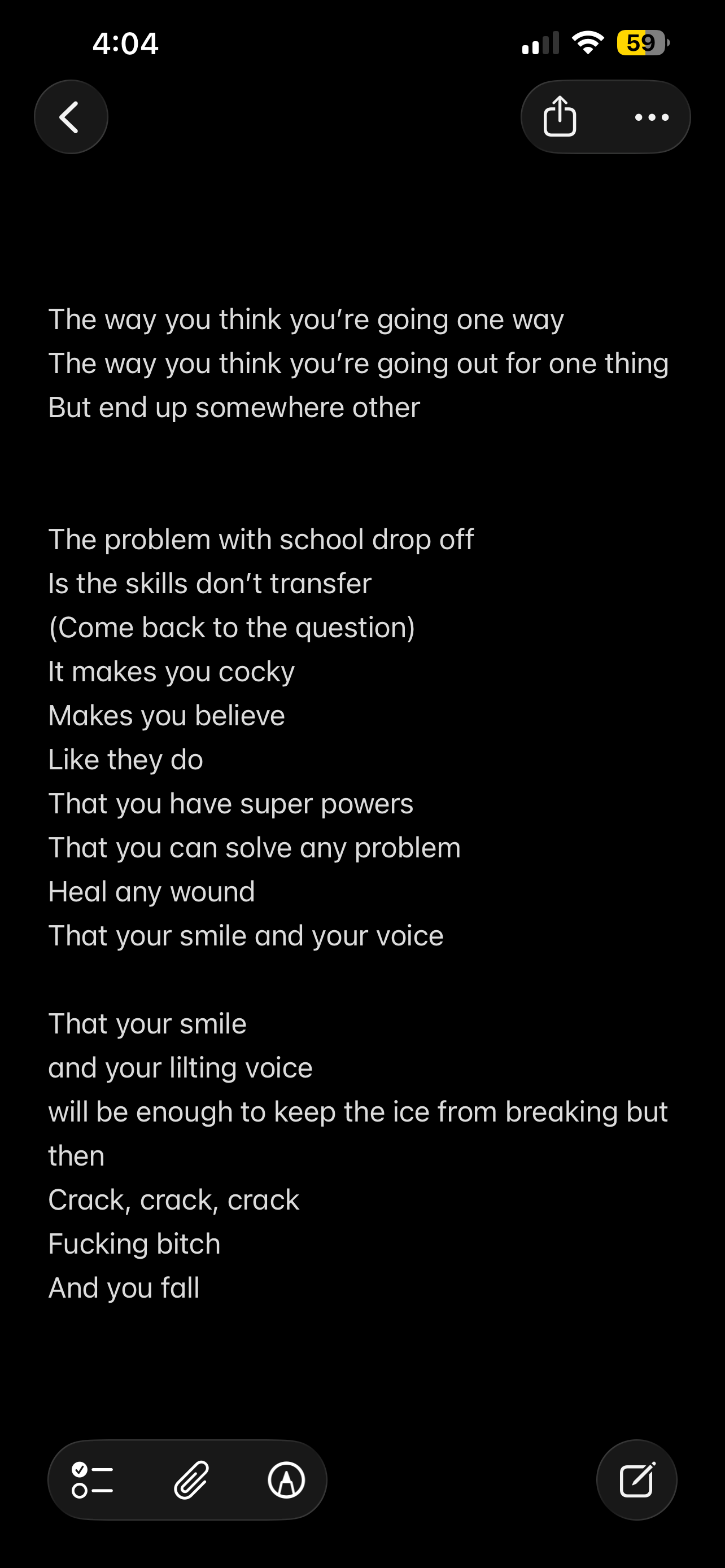
On The Hazards Of School Drop-Off
No one warns you
about the hazards of school drop-off:
the way you think you know where you’re going,
just a short hop from here to there,
but the world is always changing and you can
find yourself somewhere unrecognizable
just beyond your own front door.
The detours often start with a question—
What does a heart attack feel like?
Are you and Dad going to get a divorce?
Do you think you’ll be scared when you die?
It’s the unforeseen interruption
(at a traffic light
a drive-through window
sitting in the pickup line, awaiting big sister)
of one’s own thoughts, or some small passenger’s,
that breaks through the crust of ice you skate through your days upon
–the errands, the memories, idle fantasies, things to-do—
and punches a hole big enough for you
to fall through.
No one prepares you for the hazards of school drop-off,
the way the backseat is precisely far enough
(in space, and time)
for monumental questions to form,
and otherwise unmentionable truths
to emerge.
But over time you learn
to trust them more than you fear them.
You find a way
to hold your breath until you learn to swim,
to let yourself look at the unspeakable thing, answer
the unknowable question.
There’s safety in the space between front seat and back;
whatever is spoken there can’t hurt you.
You come to love the way the drop-off keeps you sharp,
keeps you on your toes,
shows you things you didn’t know about yourself,
your small passengers,
the world through which you all move.
The unforeseen becomes your friend:
another tool in your mother’s toolkit,
their weight and heft familiar in your hands.
No one tells you, the problem with school drop-off
Is that the skills don’t transfer.
You think you know this landscape,
but the screaming voices and the blaring whistles,
the battering rams breaking down doors
raise a different kind of question—
What are we doing?
How did we get here?
What kind of person do I want to be?
Then the safety of the front seat makes you cocky;
makes you believe
(like they do)
that you have superpowers—
that you can answer any question,
solve any problem,
heal any wound,
simply because of who you are to them.
That your sweet smile,
and your lilting voice
That’s fine, dude, I’m not mad at you
will be enough to overcome whatever this is,
Get out of the fucking car
to keep you skating, keep you breathing.
But you are nothing to these people;
your magic has no power here,
so the ice breaks,
crackcrackcrack
punches a hole,
Fucking bitch
and you fall.
-
Subscribe
Subscribed
Already have a WordPress.com account? Log in now.
 Make It Stop! (the sequel!)